
Niacinamide in Pakistan: Research and Where We Use It
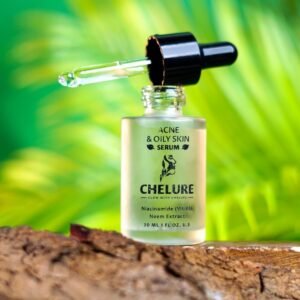
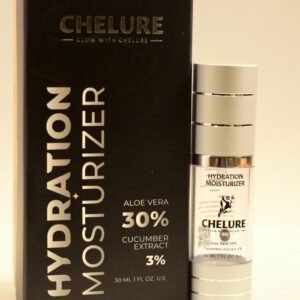
Short answer: Niacinamide is vitamin B3 used on skin to support the barrier and to help with oil and the look of pores and uneven tone. Trials of niacinamide in acne and oily skin mostly use 2% to 4%, and they report lower oil and fewer acne lesions. We use 10% niacinamide in our Acne & Oil Control Serum and a smaller amount in our Hydration Moisturizer.
Key takeaways
- Higher percentage is not proven to be better; irritation and flushing can rise with strength.
- Niacinamide is generally well tolerated and pairs with most other ingredients.
- It supports oil control but does not replace acne treatment that a doctor may advise for severe acne.
What niacinamide is
Niacinamide (nicotinamide) is the amide form of vitamin B3. In skin it is used to build the molecules that keep the barrier intact, and trials have looked at its effect on oil production. A double-blind study of topical 2% niacinamide (J Cosmet Laser Ther 2006, PMID 16766489) enrolled 100 Japanese subjects for 4 weeks and a split-face group of 30 Caucasian subjects for 6 weeks, measuring sebum excretion rate, and reported lower sebum measures, though the two groups did not respond in exactly the same way.
What the research says
| Source | What it covered | What it found |
|---|---|---|
| 2% niacinamide and sebum, J Cosmet Laser Ther 2006 (PMID 16766489) | 100 Japanese subjects (4 weeks, placebo-controlled) and 30 Caucasian subjects (6 weeks, split-face) | In the Japanese group, sebum excretion rate was significantly lower after 2 and 4 weeks. In the Caucasian group, casual sebum level fell significantly but sebum excretion rate did not |
| 4% nicotinamide gel vs 1% clindamycin gel, Int J Dermatol 2013 (PMID 23786503) | 80 people with moderate inflammatory acne, 8 weeks | Acne grade fell in both groups; no significant difference between groups |
| Cochrane review of topical acne treatments, 2020 (PMID 32356369) | Included nicotinamide among six topicals | Clinical benefit described as unclear; many trials small or at risk of bias |
| Oily skin review, 2017 (PMID 28979664) | Treatment options | Covers cosmeceuticals among options |
Is 10% better than 2% to 4%?
Not on the evidence we found. The trials above use 2% to 4%. Ten percent is common in cosmetic products, and some people feel flushing or stinging at that strength. We list the percentage on the label so you can decide. If your skin is sensitive, patch-test and start every second day.
Where Chelure uses niacinamide, and why
- Acne & Oil Control Serum: 10% niacinamide with 2% salicylic acid, zinc PCA and neem extract. Salicylic acid works inside pores; niacinamide is there for oil and barrier support.
- Hydration Moisturizer: niacinamide with 30% aloe vera, 3% cucumber extract, hyaluronic acid and peptides. Here it supports the barrier in a light water-based gel. The percentage is not printed on our product page, so we do not state one.
What happens when it is combined
No trial exists of our exact formulas. Niacinamide combines easily with most actives. In the serum, the concern is the acid-plus-10% pairing irritating some skin, which is why we recommend starting slowly. In the moisturizer it is part of a gentle, hydrating base.
Price comparison
| Product | Size | Price | Per mL |
|---|---|---|---|
| Chelure Acne & Oil Control Serum (10% niacinamide + 2% salicylic acid) | 30 mL | Rs 2,450 | about Rs 82 |
| Chelure Hydration Moisturizer (with niacinamide) | 30 mL | Rs 2,200 | about Rs 73 |
| Imported 10% niacinamide plus zinc serum | 30 mL | Rs 2,450 to Rs 4,995; most Rs 3,100 to Rs 4,400 (Pakistani online retailers, checked 3 Nov 2026) | about Rs 82 to Rs 167 |
Delivery is a flat Rs 250 across Pakistan.
Niacinamide and the skin barrier
The skin barrier is the outer layer of dead cells held together by fats, including ceramides. A laboratory study found that nicotinamide raised ceramide production several-fold in cultured human skin cells, and that applying it to skin increased ceramide and fatty acid levels in the outer layer and reduced water loss through the skin (PMID 10971324). A review of niacinamide and the skin describes the same barrier-supporting effect, with better moisture content in the outer layer, and says niacinamide may help ageing skin, pigmentary disorders and acne-prone skin (PMID 17147561). These are supportive findings, not proof that any one product will repair a damaged barrier. Our guide to damaged skin barrier signs and repair covers what else helps.
Niacinamide and uneven tone
In laboratory work on skin pigmentation, niacinamide did not change the activity of the pigment enzyme or the melanin made by pigment cells. Instead it reduced the transfer of pigment packages (melanosomes) to surrounding skin cells by 35 to 68% in a coculture model (PMID 12100180). In the same publication, 18 people with hyperpigmentation used a 5% niacinamide moisturizer against a plain moisturizer in a paired design, and 120 people with facial tanning used a 2% niacinamide product with sunscreen; niacinamide decreased hyperpigmentation and increased skin lightness after 4 weeks of use. These were small studies, and we have not checked who funded them, which is worth keeping in mind because the field has many industry-linked studies.
How niacinamide fits with other ingredients
| Combination | What to keep in mind |
|---|---|
| With salicylic acid | This is the pairing in our acne serum. Niacinamide is there for oil and barrier support while the acid works inside pores. Start every second evening. |
| With retinol | Both are commonly used in one routine. Introduce them one at a time, and use retinol on the nights you are not using an acid. |
| With vitamin C | Commonly used in the same routine, often vitamin C in the morning and niacinamide at night. If your skin stings, separate them. |
| With AHAs | Niacinamide is gentle, but AHAs can sting on their own. Moisturize afterwards and use sunscreen. |
Ten percent in the serum, and a smaller amount in the moisturizer
Our Acne & Oil Control Serum lists 10% niacinamide, and our Hydration Moisturizer contains niacinamide at a lower level that is not printed on the product page. The 2% to 5% range is where the studies above sit, so if you are sensitive, patch-test the serum on your jaw for a few days, start every second evening, and stop if you notice flushing, stinging or itching. A moisturizer is a gentler way to use niacinamide every day.
Reading the label: niacinamide, nicotinamide and niacin
- Niacinamide and nicotinamide are the same ingredient. Both are forms of vitamin B3.
- Nicotinic acid (niacin) is a different form of vitamin B3. The review we cite notes that the two can be converted into each other in the body, but nicotinic acid is the form known for flushing, so check you are buying niacinamide.
- A percentage on the label is the strength of the niacinamide itself. Our acne serum lists 10%; our moisturizer does not print one.
Common mistakes with niacinamide
- Assuming a higher percentage is better. The studies above sit at 2% to 5%, and there is no evidence that 10% does more.
- Expecting pores to shrink. Niacinamide can reduce oil, which may make pores look less noticeable, but it cannot make them physically smaller.
- Starting several new actives in the same week, then not knowing what caused flushing or stinging.
- Skipping sunscreen. Niacinamide does not protect from UV, and the pigment studies above used it alongside sunscreen.
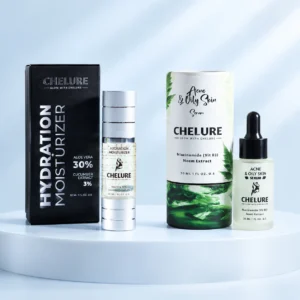
Set A: Acne Serum + Hydration Moisturizer
How to use it
Serum: a few drops on dry skin every second evening to start; moisturizer after; sunscreen every morning. Moisturizer: morning and night as needed.
Who should speak to a doctor first
Severe, painful or scarring acne; flushing or skin that does not settle; pregnancy or breastfeeding (ask about the salicylic acid in the serum).
Frequently asked questions
What does niacinamide do for skin?
Niacinamide is vitamin B3. On skin it supports the barrier and has been studied for lowering oil production, with trials of 2% reporting lower sebum measures. It is also used for the look of uneven tone. It does not treat severe acne on its own.
Is 10% niacinamide too strong?
Trials mostly use 2% to 4%, and we found no evidence that 10% works better. Some people feel flushing or stinging at higher strengths. If your skin is sensitive, patch-test and start every second day. Our serum lists the 10% strength openly so you can decide.
Can I use niacinamide with vitamin C or retinol?
Niacinamide is generally well tolerated and combines easily with most other actives. With retinol or acids the concern is irritation from those ingredients, so introduce one new product at a time, moisturize, and wear sunscreen every morning.
Does niacinamide shrink pores?
Pore size is largely set by genetics and cannot be physically shrunk. By lowering oil and keeping pores clear, niacinamide may make pores look less noticeable. A 2% niacinamide trial reported lower sebum measures, though results differed between the study groups.
How long does niacinamide take to work?
The 2% niacinamide study measured oil after 2 to 6 weeks, and a 4% acne trial ran 8 weeks. Most people judge a product after about 8 weeks of regular use. Results vary, and sunscreen still matters for marks.
Is niacinamide with salicylic acid safe together?
Our acne serum combines them. Salicylic acid works inside the pore while niacinamide supports oil balance and the barrier. The pairing can irritate some skin at 10%, so start every second evening, moisturize after, and stop if skin burns.
Sources
- Draelos ZD et al. The effect of 2% niacinamide on facial sebum production. J Cosmet Laser Ther, 2006. PubMed 16766489
- Khodaeiani E et al. Topical 4% nicotinamide vs. 1% clindamycin in moderate inflammatory acne vulgaris. Int J Dermatol, 2013. PubMed 23786503
- Liu H et al. Topical azelaic acid, salicylic acid, nicotinamide, sulphur, zinc and fruit acid (alpha-hydroxy acid) for acne. Cochrane Database Syst Rev, 2020. PubMed 32356369
- Endly DC et al. Oily Skin: A review of Treatment Options. J Clin Aesthet Dermatol, 2017. PubMed 28979664
- Tanno O et al. Nicotinamide increases biosynthesis of ceramides as well as other stratum corneum lipids to improve the epidermal permeability barrier. Br J Dermatol, 2000. PubMed 10971324
- Gehring W et al. Nicotinic acid/niacinamide and the skin. J Cosmet Dermatol, 2004. PubMed 17147561
- Hakozaki T et al. The effect of niacinamide on reducing cutaneous pigmentation and suppression of melanosome transfer. Br J Dermatol, 2002. PubMed 12100180
Related guides
- Niacinamide Serum in Pakistan: What to Check Before You Buy
- Niacinamide Serum for Oily Skin: Benefits and Side Effects
- 2% Salicylic Acid vs 10% Niacinamide: Do You Need Both?
- Best Serum for Oily Skin and Visible Pores in Pakistan
More ingredient guides
This page is general information, not medical advice. See how we write and source our guides.