
Peptides in Skincare in Pakistan: Research and Where We Use Them

Brightness & Anti-Aging Night Cream
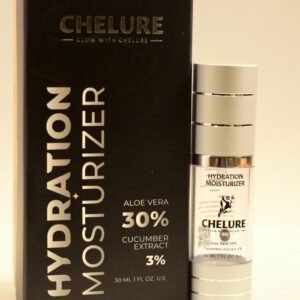
Short answer: Skincare peptides are short chains of amino acids that are designed to send signals to skin. Reviews of topical peptides describe several types, and some small trials report improvements in the look of fine lines. Most data come from small studies of specific products, so independent evidence is limited. We use 3% palmitoyl pentapeptide-4 in our Night Cream, and palmitoyl pentapeptide-1 and tetrapeptide-7 in our Hydration Moisturizer.
Key takeaways
- Peptides support the look of firmness; they are not a substitute for retinoids or sunscreen.
- They are generally gentle and add little irritation, so they pair with retinol and acids.
- Expect weeks, not days; results in trials are modest.
What peptides are
A peptide is a short chain of amino acids, the building blocks of proteins. In skincare they are grouped by how they are thought to act. A review of topical peptides in ageing skin (Int J Cosmet Sci 2009, PMID 19570099) sorts them into four groups: signal peptides, enzyme-inhibitor peptides, neurotransmitter-inhibitor peptides and carrier peptides, and reviews controlled studies of topical peptides. A 2023 review of skin ageing and rejuvenation (Br J Dermatol, PMID 37903073) places peptides among the supporting topical strategies, with retinoids as the main one.
What the research says
| Source | What it covered | What it found |
|---|---|---|
| Topical peptides in ageing skin, Int J Cosmet Sci 2009 (PMID 19570099) | Review of controlled studies of topical peptides and proteins | Describes four peptide groups and the studies behind them |
| Palmitoyl pentapeptide on photoaged facial skin, Int J Cosmet Sci 2005 (PMID 18492182) | Trial of a topical palmitoyl pentapeptide | 93 women aged 35 to 55, 12 weeks, split-face, double-blind, placebo-controlled: significant improvement in wrinkles and fine lines versus placebo. The peptide level tested was 3 parts per million; the PubMed record shows no conflict-of-interest statement |
| Double-blind trial for crow’s feet, J Clin Aesthet Dermatol 2023 (PMID 36909866) | Topical peptide trial | Reports improvement in the look of crow’s feet with the pentapeptide (PPP-4) versus another peptide and placebo; the authors declare no conflicts and call it an initial study needing larger samples |
| Synthetic peptides for sensitive skin, Pharmaceuticals 2021 (PMID 34451799) | Review of peptide use in cosmetics for sensitive skin | Describes peptides as generally suited to sensitive skin |
| Skin ageing and topical rejuvenation, Br J Dermatol 2023 (PMID 37903073) | Review | Retinoids are the most effective topical; others are supporting |
One point on strength: the palmitoyl pentapeptide trial above used the peptide at 3 parts per million. Our Night Cream lists “3% palmitoyl pentapeptide-4 (Matrixyl)”. Commercial peptide ingredients are often supplied as dilute solutions, so the “3%” on a label may describe the ingredient solution and not the pure peptide. The label wording should be checked with the manufacturer before we publish any strength comparison with the trial.
How to read it: trials are small, often short, and many test a specific product; we did not find independent data on tetrapeptide-7 or pentapeptide-1 that we can cite. We say so.
Why Chelure uses peptides in two products
- Night Cream: 3% palmitoyl pentapeptide-4. Used for the look of firmness and fine lines, alongside encapsulated retinol (see our retinol guide).
- Hydration Moisturizer: palmitoyl pentapeptide-1 and tetrapeptide-7. Included as light, gentle support for the look of firmness in a daily gel. The percentages are not printed on our product page, so we do not state any here.
What happens when they are combined
No trial exists of these exact formulas. In the cream, retinol does the main renewal work and the peptide adds a gentle, non-irritating layer of support. In the moisturizer, peptides sit with hydrating ingredients, which keeps the formula light and low in irritation.
Price comparison
| Product | Size | Price | Per mL |
|---|---|---|---|
| Chelure Brightness & Anti-Aging Night Cream | 50 mL | Rs 2,999 | about Rs 60 |
| Chelure Hydration Moisturizer | 30 mL | Rs 2,200 | about Rs 73 |
| Imported multi-peptide serum | 30 mL | Rs 2,600 to Rs 8,000; most Rs 3,400 to Rs 5,900 (Pakistani online retailers, checked 3 Nov 2026) | about Rs 113 to Rs 197 |
Delivery is a flat Rs 250 across Pakistan.
Types of peptides in cosmetics
| Type | What it is designed to do |
|---|---|
| Signal peptides | Send messages to skin cells to make more structural proteins such as collagen |
| Carrier peptides | Deliver trace minerals that skin enzymes need |
| Neurotransmitter-modulating peptides | Reduce the signals that drive expression-line muscles |
| Enzyme-inhibitor peptides | Slow the breakdown of collagen |
This grouping follows the review of topical peptides cited above and a review of peptides as cosmeceuticals, which describes cosmeceutical peptides as signal modulators of the extracellular matrix, structural peptides, carrier peptides and neurotransmitter modulators. The same review lists the disadvantages plainly: clinical evidence for efficacy is often weak, absorption may be poor because of size and low affinity for oil, and prices can be high (PMID 27451932).
What is known about the pentapeptide in our night cream
The peptide sold as palmitoyl pentapeptide, a fatty-acid-attached version of the chain KTTKS, is one of the most discussed in cosmetics. A detailed review found a sound laboratory basis for its action on fibroblasts, with stimulation of collagen types I and III and fibronectin, but also a surprising absence of skin penetration data and relatively few clinical studies (PMID 21535443). The trial we cite earlier (93 women, 12 weeks, split-face, placebo-controlled) used the peptide at 3 parts per million and found a significant improvement in wrinkles and fine lines against placebo (PMID 18492182). So there is a real, if modest, evidence base, and it comes from small studies.
Why we say what we say about strength
Our night cream lists 3% palmitoyl pentapeptide-4, and the trial used 3 parts per million. Cosmetic peptides are usually bought as dilute solutions, so a percentage on a label can describe the solution rather than the pure peptide. We therefore do not claim our cream matches the trial. We explain what peptides are studied for and let you judge how much weight to give it.
Realistic expectations
- Peptides support the look of firmness over weeks. They do not replace retinoids or sunscreen.
- Because they add little irritation, they are a comfortable addition to a routine that already includes retinol or acids.
- Judge a peptide product after about three months of steady use, using photos taken in the same light.
- See our guide to wrinkles and fine lines: what retinol and peptides can do for how the two compare.
Reading the label: peptide names and percentages
- Peptides have long names such as palmitoyl pentapeptide-4 or palmitoyl tetrapeptide-7. The number tells you how many amino acids are in the chain.
- A percentage on a label may describe the peptide solution, not the pure peptide, so two products showing 3% may not match.
- Multi-peptide blends often do not state the amount of each peptide, which makes comparison difficult.
Common mistakes with peptide products
- Expecting results like injectables. Reviews describe modest effects from small studies.
- Stacking many peptide products. Adding more does not add proportionally more benefit.
- Paying more for the word peptide on the front of the box without checking the ingredient list.
- Skipping sunscreen. Sun damage is a much bigger driver of skin ageing than any ingredient can offset.
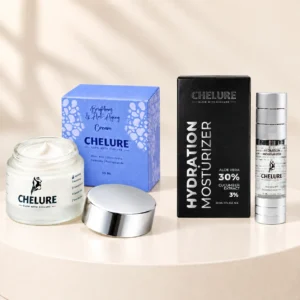
Set B: Night Cream + Hydration Moisturizer
How to use them
Cream: night only, build up slowly because of the retinol. Moisturizer: morning and night. Sunscreen every morning.
Who should speak to a doctor first
Pregnancy or breastfeeding (because of the retinol in the cream), active eczema, or any reaction that does not settle.
Frequently asked questions
What do peptides do for skin?
Peptides are short chains of amino acids designed to send signals to skin. Reviews describe four groups, and small trials report improvements in the look of fine lines. Most data come from small studies of specific products, so independent evidence is limited.
Do peptides work as well as retinol?
Not on current evidence. A 2023 review calls prescription tretinoin the most effective topical for ageing skin and places peptides among supporting options. Peptides are gentler and add little irritation, which is why our night cream uses one alongside retinol, not instead of it.
Can I use peptides with retinol or vitamin C?
Peptides are generally gentle and are used alongside retinol, as in our night cream. Vitamin C is usually used in the morning and retinol at night. Introduce one change at a time, moisturize, and wear sunscreen every morning.
How long do peptides take to work?
The palmitoyl pentapeptide trial we cite ran 12 weeks, so judge any peptide product after about three months of steady use. Results in trials are modest and vary. We cannot promise results.
Are peptides safe for sensitive skin?
A review of synthetic peptides in cosmetics describes them as generally suited to sensitive skin. Reactions are still possible to any ingredient in a formula, so patch-test and stop if skin burns or swells.
Sources
- Gorouhi F et al. Role of topical peptides in preventing or treating aged skin. Int J Cosmet Sci, 2009. PubMed 19570099
- Robinson LR et al. Topical palmitoyl pentapeptide provides improvement in photoaged human facial skin. Int J Cosmet Sci, 2005. PubMed 18492182
- Aruan RR et al. Double-blind, Randomized Trial on the Effectiveness of Acetylhexapeptide-3 Cream and Palmitoyl Pentapeptide-4 Cream for Crow’s Feet. J Clin Aesthet Dermatol, 2023. PubMed 36909866
- Resende DISP et al. Usage of Synthetic Peptides in Cosmetics for Sensitive Skin. Pharmaceuticals (Basel), 2021. PubMed 34451799
- Griffiths TW et al. Skin ageing and topical rejuvenation strategies. Br J Dermatol, 2023. PubMed 37903073
- Pai VV et al. Topical peptides as cosmeceuticals. Indian J Dermatol Venereol Leprol, 2017. PubMed 27451932
- Abu Samah NH et al. Topically applied KTTKS: a review. Int J Cosmet Sci, 2011. PubMed 21535443
Related guides
- Wrinkles and Fine Lines: What Research Says About Retinol and Peptides
- Night Cream with Retinol in Pakistan: How to Choose One
More ingredient guides
This page is general information, not medical advice. See how we write and source our guides.