
Retinol in Pakistan: What It Does and Our Night Cream

Brightness & Anti-Aging Night Cream
Short answer: Retinol is a form of vitamin A used for the look of fine lines, rough texture and uneven tone. It is among the most studied cosmetic anti-aging ingredients, but it is weaker than prescription tretinoin, and irritation is the main downside. Our Brightness & Anti-Aging Night Cream uses encapsulated retinol with 3% palmitoyl pentapeptide-4, 2% glutathione and 3% kojic acid, 50 mL for Rs 2,999.
Key takeaways
- Retinol works slowly; trials run for 12 weeks or longer.
- Dryness, peeling and stinging are common at the start, so build up slowly.
- Retinol is generally avoided in pregnancy; ask a doctor first.
- It makes skin more sun-sensitive in practice, so sunscreen every morning is essential.
What retinol is
Retinol is a vitamin A form. In skin it is converted in steps to retinoic acid, the active form that speaks to skin cell receptors and influences how cells renew and how collagen is handled. Because it needs converting, retinol is milder than tretinoin (retinoic acid itself), which is a prescription medicine and is described as the clinical gold standard for topical rejuvenation in a 2023 review of skin ageing (Br J Dermatol, PMID 37903073). A review of retinoids in skin aging (Clin Interv Aging 2006, PMID 18046911) summarises clinical efficacy and safety, including irritation as the main side effect.
What the research says
| Source | What it covered | What it found |
|---|---|---|
| Kafi et al., Arch Dermatol 2007 (PMID 17515510) | Controlled study of topical retinol on naturally aged skin | Improvement in the look of wrinkles and skin texture |
| Mukherjee et al., Clin Interv Aging 2006 (PMID 18046911) | Overview of retinoids for skin ageing | Efficacy and safety summary; irritation is the main downside |
| Randomized double-blind study, Br J Dermatol 2019 (PMID 29947134) | 44 people, 12 weeks, retinol 0.5% compared with bakuchiol 0.5% | Both reduced wrinkle surface area and pigmentation; bakuchiol was comparable to retinol and better tolerated, and the retinol users reported more facial scaling and stinging |
| Skin ageing and topical rejuvenation strategies, Br J Dermatol 2023 (PMID 37903073) | Review of options | Tretinoin is the most efficacious topical; other topicals work but with smaller effects |
Retinol vs tretinoin
Tretinoin is a prescription medicine, prescribed and monitored by a doctor. Retinol is sold without prescription. For most people who want to start gently, retinol is where the conversation begins; for visible sun damage or stubborn concerns, a skin doctor may suggest tretinoin. We do not compare strength figures between them because they are not directly comparable.
Why Chelure’s Night Cream uses these ingredients
- Encapsulated retinol (liposome). Wrapping retinol in tiny fat bubbles is designed to release it more slowly and reduce irritation. This is design intent; we do not claim it is proven better.
- 3% palmitoyl pentapeptide-4. A short peptide studied for the look of lines (PMIDs 18492182, 36909866). See our peptides guide.
- 2% glutathione and 3% oil-soluble kojic acid. Aimed at tone and dullness (see our glutathione guide). Retinol and these two cover “texture” and “tone” in one jar.
- Squalane, jojoba and avocado oil. Cushion the skin and slow water loss, important when retinol dries (PMID 29280987).
- Licorice, bearberry, allantoin, vitamin E. Soothing and antioxidant support.
What happens when they are combined
No trial exists of this exact formula. The reasoning: retinol speeds renewal, so the oils and soothing extracts are there to make it comfortable; the peptide is for the look of firmness; glutathione and kojic acid are for tone. Retinol plus kojic acid can both irritate, so start 2 to 3 nights a week, night only, and use sunscreen each morning.
Price comparison
| Product | Size | Price | Per mL |
|---|---|---|---|
| Chelure Brightness & Anti-Aging Night Cream | 50 mL | Rs 2,999 | about Rs 60 |
| Imported 0.5% retinol serum | 30 mL | Rs 2,900 to Rs 5,700; most Rs 3,700 to Rs 5,450 (Pakistani online retailers, checked 3 Nov 2026) | about Rs 96 to Rs 190 |
A serum and a night cream are different formats, so the per-mL figures are only a rough guide. Our jar adds a peptide, glutathione and kojic acid to the retinol. Delivery is a flat Rs 250 across Pakistan.
How retinol becomes active in skin
Retinol is a precursor. A study in cultured human skin cells found that they converted retinol mostly to storage forms (retinyl esters) and made only low levels of retinoic acid, and that retinol was about ten times less potent than retinoic acid in the responses measured (PMID 7806506). That slow, controlled conversion is why retinol is milder than prescription tretinoin. A 2006 review of retinoids in cosmeceuticals describes retinol and retinyl esters as non-irritant but with modest clinical efficiency, and retinaldehyde as the most efficient cosmeceutical retinoid (PMID 17014484). Reports on irritation therefore vary: in the 2019 trial above, people using 0.5% retinol reported more scaling and stinging than people using bakuchiol, so how a product is made, and how much is used, matters.
Retinol serum versus tretinoin in a 12-week trial
In a double-blind study of 45 women aged 35 to 65 with moderate sun damage, three retinol serums (stepped up from 0.25% to 0.5% to 1.0%) were compared with tretinoin cream (stepped up from 0.025% to 0.05% to 0.1%), each used with a moisturizer, over 12 weeks (PMID 32574009). After 12 weeks, investigator and self assessments and water-loss measurements were similar between the two. The retinol serum group showed earlier improvement in smoothness at week 4 and less dryness, and skin biopsies in that group showed newly formed collagen and thicker epidermis. It was a small trial of specific formulations, so it shows that a well-made retinol product can perform comparably over 12 weeks, not that every retinol product will.
How to build up: a simple six-week schedule
| Weeks | How often | Notes |
|---|---|---|
| 1 to 2 | 2 nights a week | Pea-sized amount for the whole face, on clean, fully dry skin, then moisturizer if needed |
| 3 to 4 | Every second night | Only if there is no burning, swelling or heavy peeling |
| 5 to 6 | Nightly if comfortable | Stay at every second night if skin is still adjusting |
The schedule applies to our night cream even though it uses encapsulated retinol, which is designed to release more gradually. Always use sunscreen the next morning, and pause for a few days if your skin burns, blisters or swells. Our beginner guide to starting retinol covers purging and what to expect in the first month.
What retinol does not do
- It does not protect against the sun. It can make skin feel more sensitive, so daily sunscreen is essential.
- It is not suitable in pregnancy, while breastfeeding or when trying to conceive without asking a doctor (see our pregnancy skincare guide).
- It is not a spot treatment for a single pimple, and it does not replace prescription tretinoin when a doctor recommends it.
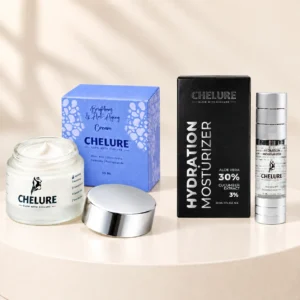
Set B: Night Cream + Hydration Moisturizer
How to use it
Night only; pea-sized on clean, dry skin; 2 to 3 nights a week for the first weeks; moisturizer if needed; sunscreen every morning; patch-test first; stop if skin burns, blisters or swells.
Who should speak to a doctor first
Pregnancy or breastfeeding or trying to conceive, active eczema or rosacea, a past reaction to retinoids, or patches that are sudden, uneven or spreading.
Frequently asked questions
What does retinol do for skin?
Retinol is a form of vitamin A that skin converts to retinoic acid. Studies report it improves the look of fine lines, texture and uneven tone, with dryness and peeling as the main downsides. It is among the most studied cosmetic anti-aging ingredients but milder than prescription tretinoin.
How long does retinol take to show results?
Trials run 12 weeks or longer, so judge retinol after about three months of steady use. Start 2 to 3 nights a week and build up slowly. Early dryness or peeling is common and does not mean it is working faster.
Retinol vs tretinoin: what is the difference?
Tretinoin is retinoic acid itself, a prescription medicine, and a 2023 review calls it the gold standard topical for rejuvenation. Retinol is sold without a prescription and must be converted in the skin first, so it is milder. A skin doctor can advise whether tretinoin suits you.
Why does retinol peel at first?
Retinol speeds up how skin renews itself, which can cause dryness, scaling and stinging, especially in the first weeks. In a 12-week trial, retinol users reported more facial scaling and stinging than bakuchiol users. Build up slowly, moisturize, and stop if skin burns, blisters or swells.
Can I use retinol with vitamin C or acids?
Retinol and exfoliating acids can both dry or irritate skin, so avoid using them on the same night at first. Many people use vitamin C in the morning and retinol at night. Introduce one active at a time, moisturize, and use sunscreen every morning.
Is retinol safe in pregnancy?
Retinol is generally avoided in pregnancy, while breastfeeding and when trying to conceive. Our night cream contains encapsulated retinol, so please ask your doctor before using it in any of these situations.
Do I need sunscreen with retinol?
Yes. Retinol can make skin feel more sensitive, and sun damage is what many people are trying to improve. Wear a broad-spectrum sunscreen every morning and use retinol at night only.
Sources
- Mukherjee S et al. Retinoids in the treatment of skin aging: an overview of clinical efficacy and safety. Clin Interv Aging, 2006. PubMed 18046911
- Kafi R et al. Improvement of naturally aged skin with vitamin A (retinol). Arch Dermatol, 2007. PubMed 17515510
- Dhaliwal S et al. Prospective, randomized, double-blind assessment of topical bakuchiol and retinol for facial photoageing. Br J Dermatol, 2019. PubMed 29947134
- Griffiths TW et al. Skin ageing and topical rejuvenation strategies. Br J Dermatol, 2023. PubMed 37903073
- Robinson LR et al. Topical palmitoyl pentapeptide provides improvement in photoaged human facial skin. Int J Cosmet Sci, 2005. PubMed 18492182
- Aruan RR et al. Double-blind, Randomized Trial on the Effectiveness of Acetylhexapeptide-3 Cream and Palmitoyl Pentapeptide-4 Cream for Crow’s Feet. J Clin Aesthet Dermatol, 2023. PubMed 36909866
- Lin TK et al. Anti-Inflammatory and Skin Barrier Repair Effects of Topical Application of Some Plant Oils. Int J Mol Sci, 2017. PubMed 29280987
- Kurlandsky SB et al. Biological activity of all-trans retinol requires metabolic conversion to all-trans retinoic acid and is mediated through activation of nuclear retinoid receptors in human keratinocytes. J Biol Chem, 1994. PubMed 7806506
- Sorg O et al. Retinoids in cosmeceuticals. Dermatol Ther, 2006. PubMed 17014484
- Draelos ZD et al. A Double-Blind, Comparative Clinical Study of Newly Formulated Retinol Serums vs Tretinoin Cream in Escalating Doses: A Method for Rapid Retinization With Minimized Irritation. J Drugs Dermatol, 2020. PubMed 32574009
Related guides
- Night Cream with Retinol in Pakistan: How to Choose One
- How to Start a Retinol Night Cream Without Irritation
- Retinol Serum vs Retinol Night Cream: Which to Choose in Pakistan
- Wrinkles and Fine Lines: What Research Says About Retinol and Peptides
- Pregnancy-Safe Skincare in Pakistan: What to Avoid and Ask
More ingredient guides
This page is general information, not medical advice. See how we write and source our guides.